
AI on the Factory Floor: Delivering Real ROI in Manufacturing
Australian manufacturers are entering a new phase of industrial AI adoption, moving beyond experimentation and isolated pilots.
Now the focus is on operational execution – using AI on the factory floor to reduce downtime, improve production efficiency and create smarter manufacturing environments.
For many businesses, the pressure is mounting from every direction: rising operating costs, ageing infrastructure, workforce shortages, tighter compliance requirements and increasing expectations around operational resilience.
Hence why operational efficiency is now a leading business priority for the manufacturing industry in Australia.
The manufacturers gaining traction are those applying AI to practical operational challenges with measurable business outcomes.
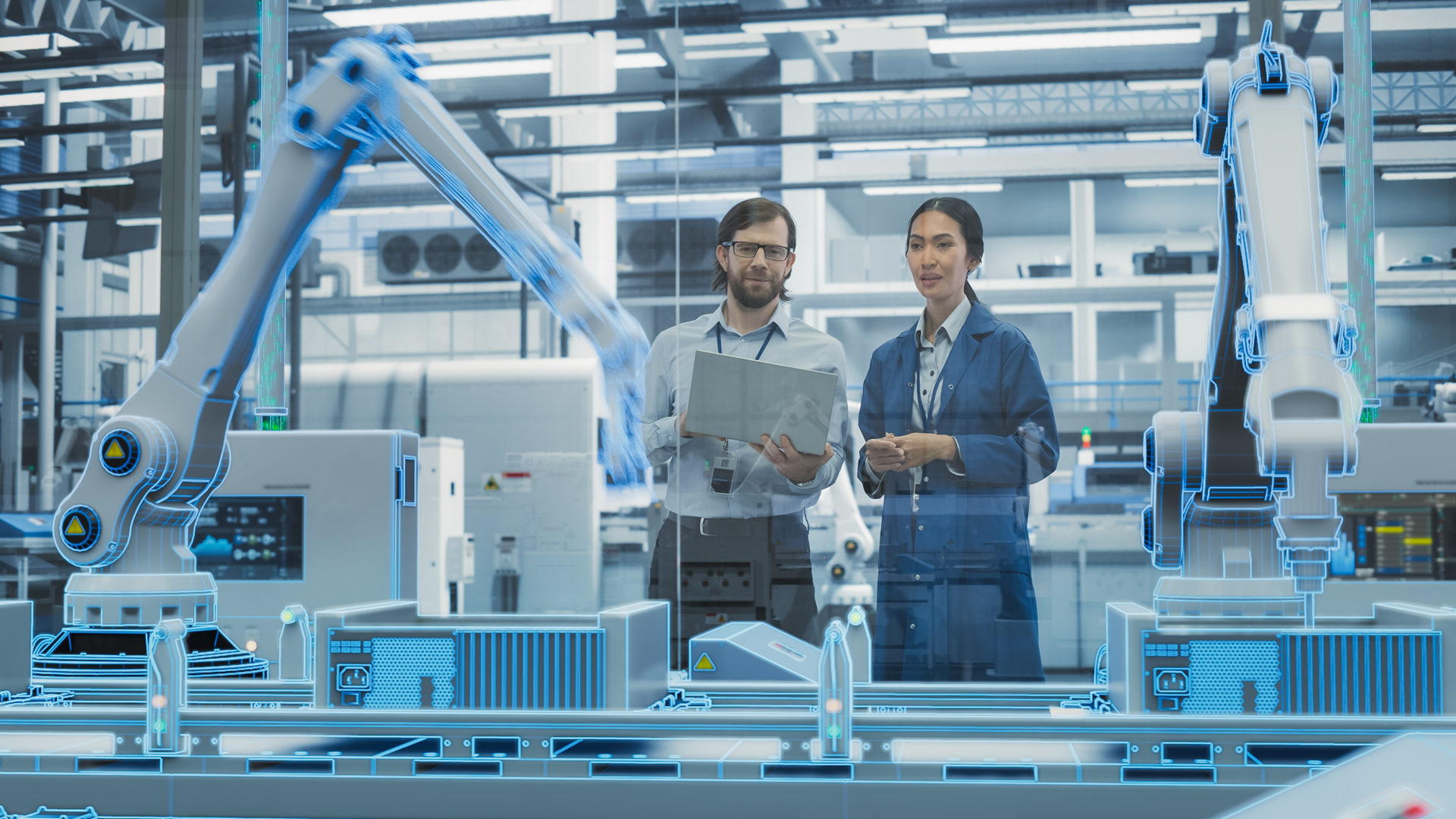
From Reactive to Predictive Maintenance
Traditionally, manufacturers have relied on reactive maintenance models – fixing machinery after failure – or scheduled servicing programs that often create unnecessary operational disruption.
AI is changing that model.
By combining IoT sensors, machine telemetry and AI-driven analytics, manufacturers can monitor equipment health in real time and identify anomalies before operational disruption occurs.
Instead of waiting for a conveyor belt, compressor, robotic arm or production asset to fail, operational teams can predict maintenance requirements and intervene earlier.
The value is immediate and measurable:
Reduced downtime
Lower maintenance costs
Improved asset utilisation
Increased production continuity
Reduced operational risk
Importantly, predictive maintenance also shifts operational teams away from constant firefighting towards proactive management of factory floor operations.
For manufacturers operating under tight production schedules, even small improvements in uptime can create significant commercial impact.
“Many organisations have trialled AI but few have captured measurable value. Common issues include poor data readiness, unclear use case alignment, lack of change management, or treating AI as a standalone tool rather than a process enabler. At OneStep Group, our focus is on making AI investments tangible, measurable and aligned with outcomes – not just technical novelty.”
Why Digital Twins Matter
Digital twins are also becoming a major focus for manufacturers modernising operational environments.
In simple terms, a digital twin is a virtual representation of a physical asset, production line or manufacturing environment. Using live operational data, manufacturers can simulate performance, identify bottlenecks and test operational changes before applying them in live production environments.
This creates stronger operational visibility across the factory floor.
Production managers can optimise workflows more effectively. Engineering teams can benchmark equipment performance continuously. Operational leaders gain better insight into energy consumption, throughput and production efficiency.
For large-scale manufacturing environments, this becomes increasingly valuable as operational complexity grows.
The outcome is not simply more data – it is better operational intelligence.
Tackling Data Challenges, Delivering Operational Outcomes
The success of AI on the factory floor depends heavily on data readiness, however.
Many manufacturers still operate across fragmented environments spanning ERP systems, operational technology platforms, factory systems and multiple cloud environments. Valuable operational data exists across the business but often remains disconnected.
This is where platforms such as Microsoft Fabric are gaining momentum by helping manufacturers unify data estates across Azure, Databricks and Power BI environments.
Without connected and trusted data, industrial AI struggles to scale effectively.
Manufacturers need visibility across operational systems before AI can generate meaningful predictive insight.
“We’re seeing a rapid adoption of cloud-native data platforms such as Databricks and Microsoft Fabric, which are enabling faster AI experimentation and scale. This investment is helping unify data and enable scalable analytics. At OneStep Group, we turn operational data into business value through insights, automation and predictive intelligence. This means we help businesses go beyond ‘keeping the lights on’ to making smarter, faster decisions powered by AI and data.”
Across Australia, the manufacturers seeing the strongest outcomes are taking a focused and practical approach to industrial AI adoption.
In short, they are not attempting to transform entire operations overnight. Instead, they are targeting specific operational pain points where AI can deliver measurable business value quickly.
That starts with asking practical questions:
Where is downtime impacting production and revenue?
Which operational assets create the highest business risk?
What operational data already exists across the environment?
Which manual processes could be improved through predictive insight?
Where are operational bottlenecks slowing productivity?
The most successful industrial AI projects typically start small, prove measurable value quickly and scale from there.
Because ultimately, the real ROI of AI on the factory floor is not theoretical. It is measured in uptime, productivity, operational resilience and smarter decision-making at scale.
Book an Industrial AI Discovery Session to assess your manufacturing environment, identify predictive maintenance opportunities and explore how AI-driven operational intelligence can help modernise factory floor operations in 2026.
Contact us here